INTRODUCING TOTAL TOY CREATIVE. A Product of the Toypreneur.
AI is answering parents'
toy questions.
Is your brand in the answer?
This is the partnership that builds trusted, third-party coverage AI tools can find and learn from when a parent asks.
+
The Toy Industry
is at a Crossroads.
Toy marketing has always followed where parents were paying attention.
Yet, today, parents aren't just changing where they discover toys.
They're also changing how they research, compare and decide which toys are right for their families.
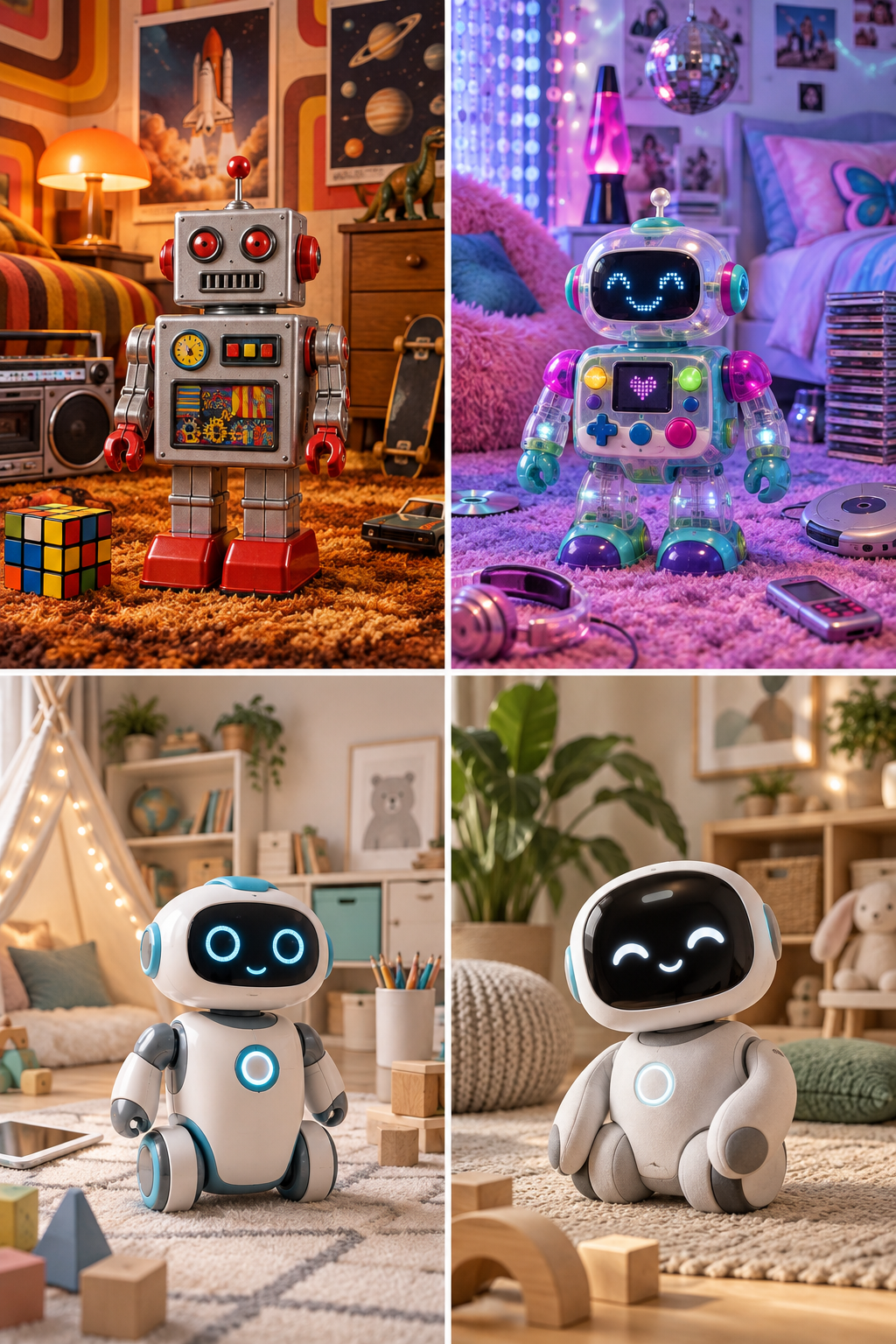
Every era had a strategy.
Era 1.
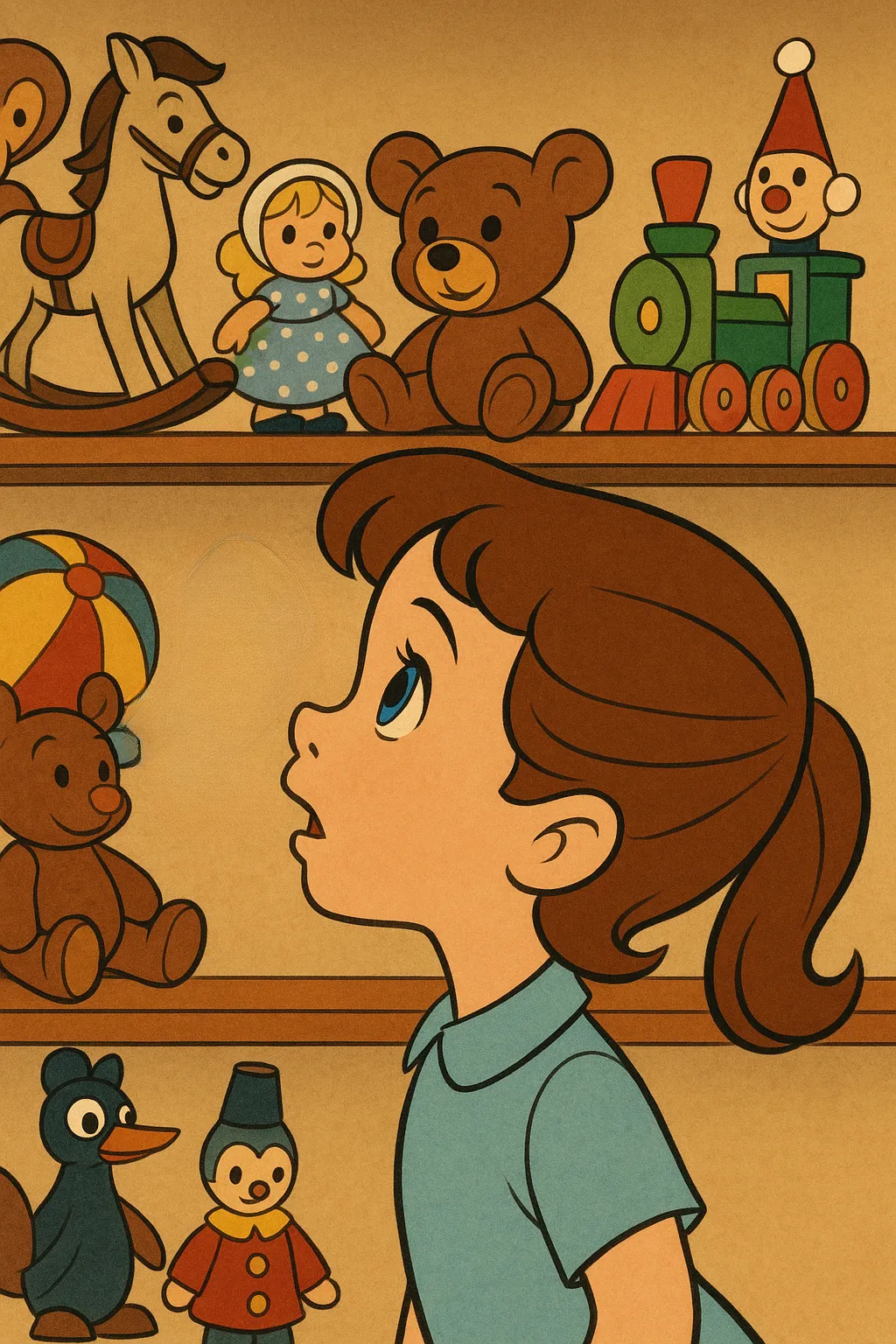
CARTOON ERA
Holiday print catalogs. TV commercials after school and on Saturday mornings. You paid for airtime and hoped the right kid (and the right parent) was watching.
Era 2.
SEARCH ERA
Parents started researching before buying. The goal shifted to being findable. Websites, Blogs, SEO, and keyword rankings became the new shelf space.
Era 3.
REACH ERA
Social media. Influencers. TikTok. The goal was visibility and virality. More creators, more platforms, more eyeballs. Reach was the metric that mattered.
Welcome
...to Era 4.
THE AUTHORITY ERA
AI-driven discovery is adding another layer to the way parents find products.
Parents can now describe exactly what they're looking for, such as the child's age, interests, play style, occasion or even a parenting problem, and ask AI for ideas.
That creates a new opportunity for toy brands: making sure there is enough credible context online for AI (and parents) to understand not simply what your product is, but when and why it might be the right answer.
The New Game
TikTok impressions. Instagram reach. Influencer views. For impulse purchases at the right price point, they convert.
However, they measure visibility in a single moment, on a single platform, controlled by a single algorithm.
Now there's another game score most toy brands aren't tracking at all...
It's the one that determines whether a parent finds you, trusts you, and buys from you when they're actually ready to spend and solve a parenting problem.
35%
Higher organic click-through rate for brands cited in Google AI Overviews than for brands that weren't cited.
Seer Interactive, 2025
7%+
The share of AI answers that cite video more than doubled in 2026 from ~ 7% to ~16% with YouTube preferred over social.
The Answer Signal, 2026
90%
Nearly 90% of third-party citations in AI answers come from listicles, comparison pages, and review sites.
AirOps
6.5x
For early product discovery questions, brands are 6.5x more likely to be in AI answers through 3rd-party sources than own website.
AirOps
32% v 3%
Of AI citations to social and video sites, YouTube is about 32%. Instagram and TikTok combined are about 3%.
OtterlyAI, 2026
41%
Of YouTube videos cited by AI, about 41% had fewer than 1,000 views. Showing relevance vs. reach.
OtterlyAI, 2026
1.8% / 4.9%
The average share of followers reached by an organic post via Facebook and Instagram.
Socialinsider, 2026
156%
Higher pick rate for pages combining text, images, video, and structured data than text-only pages.
Wellows, 2025
What does AI need to understand about your product?
AI discovery isn't based on one simple ranking factor. Different systems retrieve and evaluate information differently.
Useful, relevant, indexable content and credible third-party references can give these systems more context about your brand and products.
That can include:
Long-form blog posts and reviews
Videos
Podcasts
SEO/GEO/AEO-optimized dedicated features
Independent third-party coverage
Visibility is not the same
as discoverability.
Visibility is being seen. Discoverability is being found...again and again. Even by the parent who wasn't even looking for you yet.
Increasingly, brands need both.
Social content can introduce your product to a parent. Influencers can create awareness. Advertising can generate reach. Search can capture intent.
AI-powered discovery adds something different: the possibility of your product surfacing when a parent describes what they need and asks for an answer.
That makes the context surrounding your product increasingly valuable.
You can buy visibility on a hundred platforms. Discoverability is what gives AI something to draw on when it answers.

Any creator can put your toy in front of parents...

But Total Toy Creative, by long time toy and play expert Charlene DeLoach, is designed to help parents understand where your toy fits and create the third-party context that can help search and AI systems understand it too.
That's the difference between spending money on coverage and investing in discoverability.
When a toy is discussed across video, audio, written and social content, each format creates another opportunity to explain the product from a different angle.
What does it do?
Who is it for?
What kind of play does it encourage?
What parent problem might it solve?
When might a family use it?
Those are the kinds of questions parents ask, and the kinds of context LLM discovery systems need from third party media.
That's the difference between a moment of coverage and a growing discovery footprint.
This Is How Your Toy Becomes the Answer
Total Toy Creative pairs your brand with toy-and-play strategist Charlene DeLoach for content across her parent facing ecosystem, Playroom Chronicles, in a way that helps AI understand your product's play purpose.
Here's what that partnership actually delivers:
Reach
Some parents listen to podcasts. Some read blogs. Some only catch things on social. Coverage across formats creates opportunities for parents to encounter it in the places they already spend time.
Relate!
One parent may care about independent play. Another needs a birthday gift. Another wants something for a long car ride. The product hasn't changed, but the parent/child reason for it has.
Recommend!
Useful third-party content creates additional independent context around your products and that context can remain searchable and discoverable long after publication and in different ways.
Ways to Work With Me
One PRODUCT. Multiple formats. More ways to be discovered.
Instead of hiring separate creators for written content, video, audio and social coverage, one partnership gives your product multiple opportunities to be seen, understood and discovered through one toy-and-play expert with the goal of reach and AI discoverability.
Both options feature on product on Playroom Chronicles.
The difference is how much coverage it gets.
PRICING
Choose Your Plan
$350 + product
Get your product in the mix.
Submit one product for evaluation and consideration across the Playroom Chronicles media ecosystem.
Your product may be selected for one or more of the following:
A podcast mention or social media feature
Inclusion in a shopping listicle or play guide
A dedicated product review
Eligibility for independent Toy Seal Award consideration
Consideration for additional media opportunities
Consideration for future play app inclusion
Specific coverage and television appearances are not guaranteed. The fee covers product evaluation and consideration, not placement.


$1500 + product
Take it from the mix to the media.
One product participates in a coordinated, multi-platform promotional campaign.
Your package includes:
Inclusion in one shared sponsored television segment
A video and audio podcast mention
Inclusion in a shoppable Playroom Chronicles listicle
Inclusion in a television recap article
One shared social media post or reel distributed across Facebook, Instagram, TikTok, and LinkedIn
Inclusion in a Play Guide
Eligibility for independent Toy Seal Award consideration
Consideration for future play app inclusion
Consideration for additional independent media opportunitiesConsideration for additional independent media opportunities
Television placement is subject to product approval, station requirements, and scheduling terms. Sponsored content will be disclosed as appropriate.
What brands say about working with me
"I saw in our CisionPoint we had a huge hit with our Rack-O Jr. As per usual Charlene, you were awesome with our game."
— Irena
"We were beyond impressed with Charlene's knowledge and experience in digital influencer communications."
— Jen
"Charlene is a consummate professional and polished on-camera. She knows toys well, needs little coaching and her content always comes out so well. She's so organized and never wastes your time--an absolute pleasure!"
— Lisa
Charlene DeLoach, Your Partner
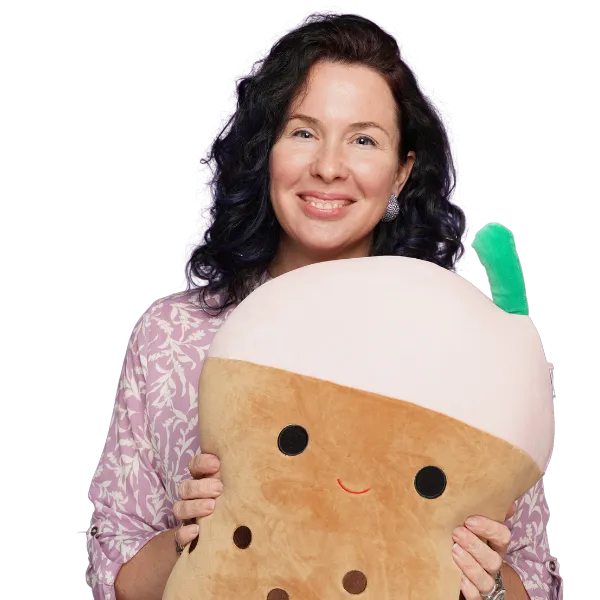
Charlene is a toy industry expert, AI visibility and conversion consultant, media personality, and the founder of The Toypreneur and Playroom Chronicles. Two brands built to bridge the gap between toy companies and the parents they're trying to reach.
With 15+ years in the toy industry, and 30 Years in business, 200+ TV appearances, and 350+ third party published articles, she's one of the few people who genuinely occupies both sides of this conversation: the industry insider and the parent who lives it every day.
Every product she covers gets evaluated through one lens: does this solve a real problem for a real parent? That editorial standard is what makes her audience trust her recommendations, and that trust is what you're partnering with.
Things Brands Ask.
Where is our product covered?
Your product is covered across the Playroom Chronicles ecosystem. Playroom Chronicles is focused specifically on toys, play and parent needs. So your product is being placed in highly relevant content.
That also supports your brand’s AI visibility by creating more independent, crawlable context around what your product is, who it is for and how it fits into play.
Instead of hiring multiple creators to build that footprint, the partnership gives you multiple formats and platforms through one toy and play expert at one accessible price.
You have a small following?
That's a reasonable question, especially if you usually judge creators by audience size. If your main goal is immediate social reach, follower count should be part of your decision.
Total Toy Creative is built for a different goal. It puts your product across blog, video, and audio content so parents and AI tools have more information about it. I also put ad money behind key posts instead of relying on organic traffic alone.
Is television or outside media coverage guaranteed?
Pitching stories is a big part of what I do, and it's part of the value of working with me, but paying for a Pinlight doesn't buy placement. However, the Limelight package does.
I pitch based on story, timing, and fit. If a story is selected, I choose the products myself, and the final decision belongs to me and the outlet. I tell outlets about my relationships with the brands I work with.
If you have more questions about the Limelight, you can see the FAQs on that page.
Does joining guarantee that AI will recommend our products?
No publisher, marketer or agency can control what an AI system ultimately recommends.
What we can do is create more useful, relevant, independent and indexable context around your products so parents, search engines and AI systems have more information available to understand what they are, who they're for and why they might matter.
How does the product selection process work?
With the Pinlight Plan, you submit one priority product. Your content will be scheduled within 60 days of receiving your product and required materials, unless we mutually agree to hold it for a later launch or seasonal window.
For Limelight Plan, the TV placement is within 12 months from package purchase and you have the opportunity to update or change priorities in the next quarter if you product did not get a TV segment spot in the previous quarter.
How does this fit our existing strategy?
Think of Total Toy Creative as an independent credibility and authority layer on top of the marketing you already control.
Your team can create advertising, social content, product pages and brand messaging. What is harder to create internally is an independent toy and play resources discussing your products across multiple editorial formats.
What does paid promotion mean?
Social media reach is harder than it's ever been. Algorithms change without warning, and a post can get almost no views no matter how good it is. If your product depended only on organic traffic, its visibility would depend on luck.
So I put ad money behind key posts. That puts your content in front of parents who don't follow me yet, chosen by things like interests and the age of their kids. It also means your product isn't limited by the size of my following or subject to the whims of the algorithm.
Can I see examples?
Yes. Here's my work:
How do you measure results?
I don't measure success by follower counts. I look at two things: what AI tools say about your product, and how your content performs.
When you sign up, I check what AI tools are saying about your product and your toy category right now. That's your starting point. After the content goes live, I check again so you can see what changed and what didn't. AI answers shift with the season, so I check the same way each time and look for patterns, not one answer.
No one controls what an AI recommends, so I don't promise it. What I promise is the content, and an honest recording of what changed.
Why you, Charlene?
I know toys and play. I've worked in the toy industry for 15+ years, with 200+ TV appearances and 350+ third party published articles. I know how toys are made, sold, and used at home. I also bring 15 years of business experience from before toys, plus hands-on work with AI and sponsorships.
You get everything in one place. Video, audio, blog posts, and social posts, all from one person who covers your toy from every angle. No hiring and coordinating several creators.
I connect toys with how parents shop now. I understand AI, content, and sales, and I build your content around where parents are actually looking, including AI tools.
I'm a parent, too. I judge every product by one question: does this solve a real problem for a real parent?
What do you mean by other editorial opportunities?
Beyond the guaranteed content, products may be considered for additional opportunities across the larger Playroom Chronicles ecosystem.
Depending on the product and timing, that could include play guides, awards or seals, seasonal features and other special editorial projects.
Products may also be considered for independent third-party media opportunities when they fit an appropriate story. Those placements remain entirely editorial and are never guaranteed.
Why evergreen content?
Social follower count is only one way content gets distributed (and seen).
The content I create is intentionally built across multiple discovery channels rather than depending on a single social audience.
More importantly, the content remains searchable and discoverable. The goal is not to rent one moment of attention. It is to build a larger footprint around your product.
Will competing products be featured with mine?
I aim not to include directly competing products together. For example, two brick building brands wouldn't share a roundup. If there are brands you'd rather not appear next to, tell me when you sign up and I'll keep that in mind.
However, my play guides and play app work differently. They cover toys from many brands, so similar or competing products can appear in both.
What are the play guides and app?
They're like gift guides, but I show how kids can play with each toy, not just what to buy. I publish two a year, a holiday edition and a spring and summer edition. Products are considered for them based on editorial fit, and inclusion isn't guaranteed. A guide can include several similar products, since it covers what's popular across brands.
The app is being built out and let's parents get real time play prompts.
Beyond Play
The way parents discover toys is expanding.
Be Seen.
Be Understood.
Be Discoverable.


